The Situation
In early 2025, a homeowner in Iowa City experienced a significant basement flooding event after a water main froze and burst due to cold weather. The homeowner had been away from the residence for an extended period, allowing indoor temperatures to fall well below freezing. As a result, the basement flooded with approximately five feet of water, which later froze and remained in place before professional remediation could begin.
Following the removal of the flood water, the homeowner observed cracking, leaning, and bowing in the basement foundation walls and sought an engineering opinion to understand the condition of the structure and determine what repairs were necessary.
The Inspection
We performed a non-invasive structural inspection on October 1, 2025, focused on the observable conditions of the home's foundation system. The property, originally constructed in 1955, is a single-family residence with a CMU (concrete masonry unit) foundation.
The purpose of the inspection was to assess the structural integrity of the foundation after prolonged flooding and freezing conditions, and to provide clear recommendations for remedial action.
What We Observed
The exterior grading around the home was relatively flat, increasing the likelihood of water ponding adjacent to the foundation. The gutter system was obstructed by plant debris, limiting proper roof drainage. Cracks between the concrete patio and the foundation wall created additional pathways for water penetration.
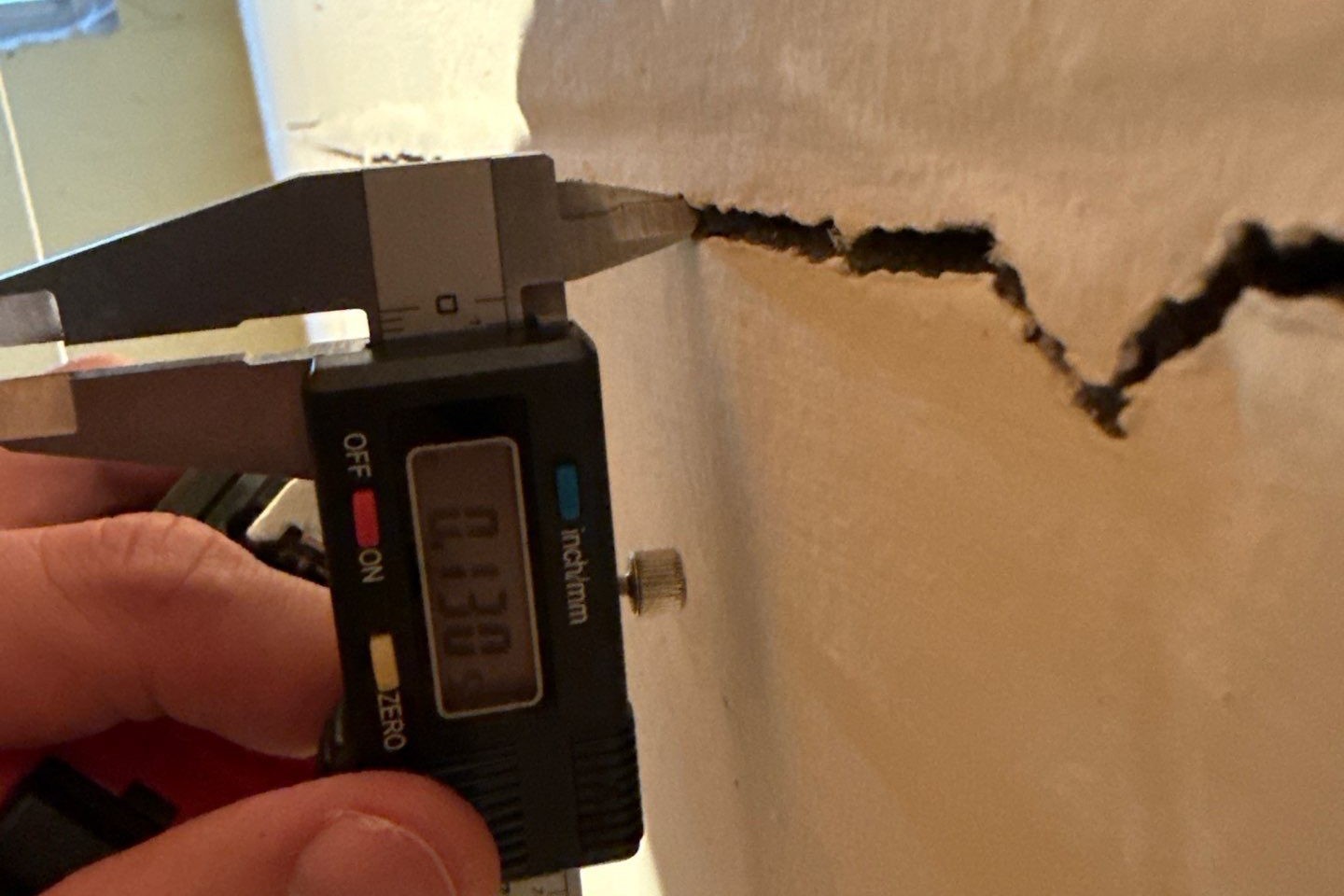
Within the basement, foundation walls exhibited a combination of horizontal and stair-step cracking consistent with lateral soil pressure and prolonged moisture exposure. Several sections of the CMU foundation showed measurable bowing and inward movement, with portions exceeding recommended tolerances.
Recommended Remedial Actions
- Improve exterior grading to promote positive drainage away from the home
- Regular gutter maintenance to control roof runoff near the foundation
- Crack repair using flowable mortar or structural epoxy injection
- Wall bracing along portions of the foundation exceeding acceptable tolerances
- Ongoing monitoring where movement is marginally within tolerance
Client Perspective
"Good communication and timeliness. You showed up when you said you would, early in fact, and the inspection was quick. The communication and responsiveness were key." — Brad Bishop, Client
Project Details
- Location: Iowa City, Iowa
- Client: Contractor
- Service: Observation & Report (O&R)
- Scope: Interior basement walls — cracking and potential bowing following flood and freeze event


