The Situation
A prospective homebuyer received a pre-purchase inspection report identifying lateral displacement in both a foundation wall and a retaining wall at a single-family residence constructed in 1978. A foundation contractor had previously reviewed the conditions and recommended further evaluation by a licensed professional engineer.
Given the potential implications of foundation movement and retaining wall performance, the client sought an engineering opinion to better understand the structural condition of the home and determine whether repairs or stabilization measures would be necessary prior to purchase.
The Inspection
We performed a non-invasive structural inspection focused on the observable conditions of the home's foundation and retaining wall systems.
The purpose of the inspection was to conduct an Observation & Report (O&R), evaluate the reported wall displacement, and provide clear recommendations regarding structural performance, monitoring, and potential remedial actions.
What We Observed
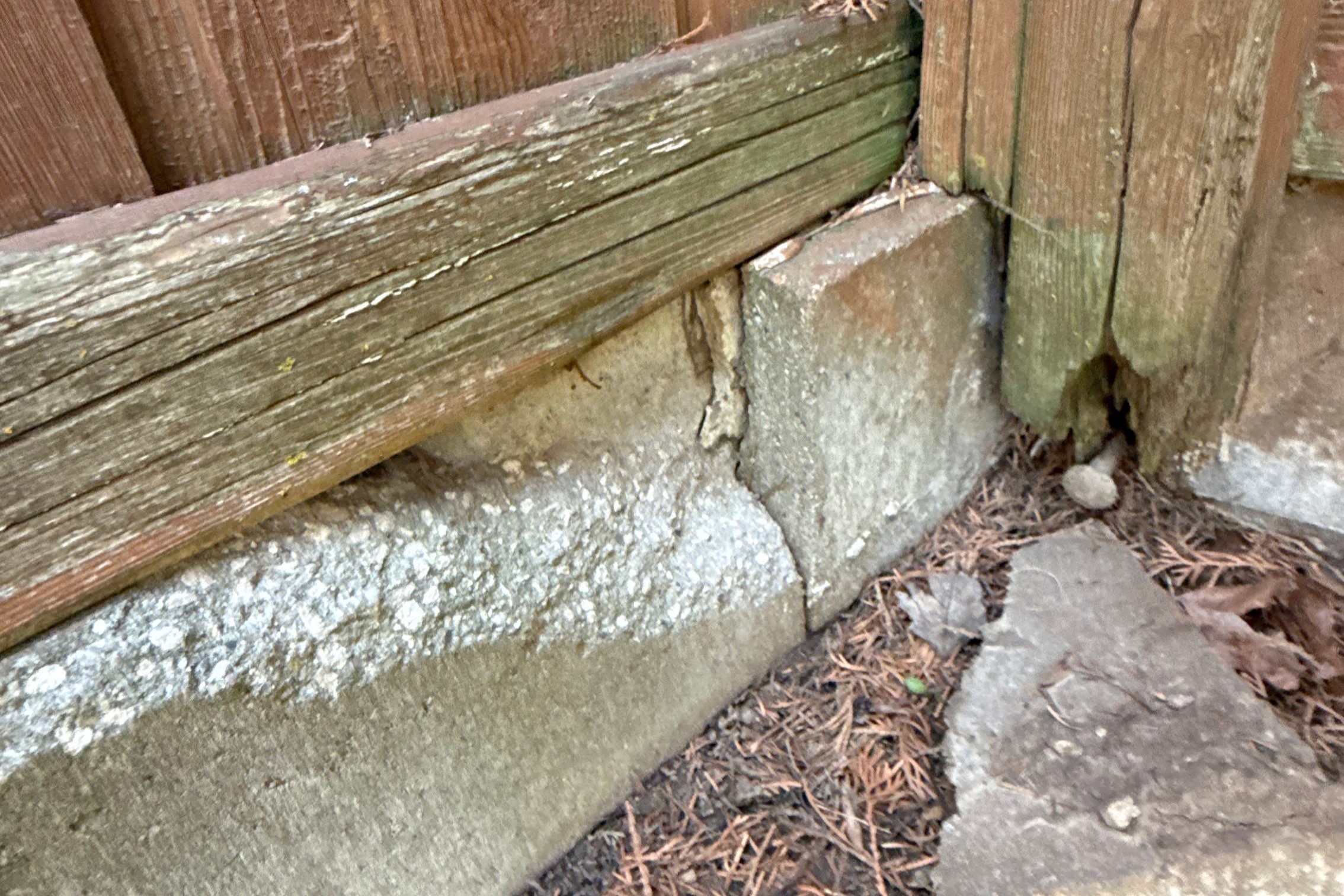
At the exterior, the retaining wall along the rear yard exhibited measurable deflection, with portions at or slightly exceeding commonly accepted serviceability limits. A horizontal crack was observed along the top of a section of the retaining wall near the garage, likely related to a localized defect rather than a broader structural issue. Localized deterioration of CMU units and adjacent fence posts was also observed, consistent with prolonged moisture exposure.
A horizontal gap was noted in the veneer along the eastern foundation wall. Because veneer systems are non-structural, this condition was considered cosmetic, though repair was recommended to prevent water intrusion.
Within the interior, the eastern foundation wall at the garage was observed to be leaning beyond typical serviceability limits. However, the absence of significant cracking or signs of recent movement suggests that the condition is long-standing and currently stable. The western foundation wall exhibited a hairline horizontal crack but remained generally plumb and did not show signs of structural distress.
Additional cracking was observed in drywall finishes throughout the home, consistent with typical material behavior and minor building movement — not indicative of structural concerns.
Recommendations
Based on conditions observed, a combination of monitoring, maintenance, and targeted improvements was recommended:
- Retaining wall: Implement water mitigation measures to reduce hydrostatic pressure. Monitor for signs of continued movement, with anchorage recommended if progressive displacement is observed.
- Eastern foundation wall: Monitor before committing to structural bracing. Stabilization warranted if future movement or cracking develops.
- Western foundation wall: Monitor for crack growth or inward movement, with bracing recommended if conditions change.
- Cosmetic repairs to the exterior veneer and interior drywall were advised.
Impact
By identifying that the observed wall movements were likely long-standing and stable, the report helped avoid unnecessary immediate repairs while still outlining a path for future action if needed. The result reduced uncertainty, supported informed decision-making, and helped the client move forward with confidence.
Project Details
- Location: Clive, Iowa
- Client: Homebuyer
- Service: Observation & Report (O&R)
- Scope: Foundation wall displacement, retaining wall deflection, and interior cracking evaluation


