Sagging roof and Trusses
“I was relieved. Either way, I would have had to fix it. But they showed me the pictures, explained everything, and said no action was needed.”
- Deb Eisenlauer, Homeowner
The Situation
In 2025, a homeowner in Iowa was preparing to sell her residence when a concern was raised during the buyer’s home inspection. The inspector noted what appeared to be sagging along the garage roofline and suggested that a structural engineer evaluate the condition further. There was also concern that portions of the roof truss system may have been cut or modified.
For the seller, the implications were significant. If structural deficiencies were confirmed, repairs would be required before closing, or the buyer could withdraw from the transaction altogether. Either outcome would result in financial and logistical complications. The homeowner’s realtor recommended StructSolve Engineering to provide an independent structural opinion and clear direction on how to proceed.
The Inspection
StructSolve Engineering performed a non-invasive structural inspection focused on the garage roof and attic framing system. The purpose of the evaluation was to conduct an Observation and Report (O&R) to assess the integrity of the roof trusses and determine whether the conditions noted in the home inspection represented a structural deficiency.
The residence, originally constructed in the mid-20th century, utilized prefabricated wood trusses to support the garage roof. The inspection was limited to readily visible and accessible components, consistent with StructSolve’s Engineering Observation standards.
What We Observed
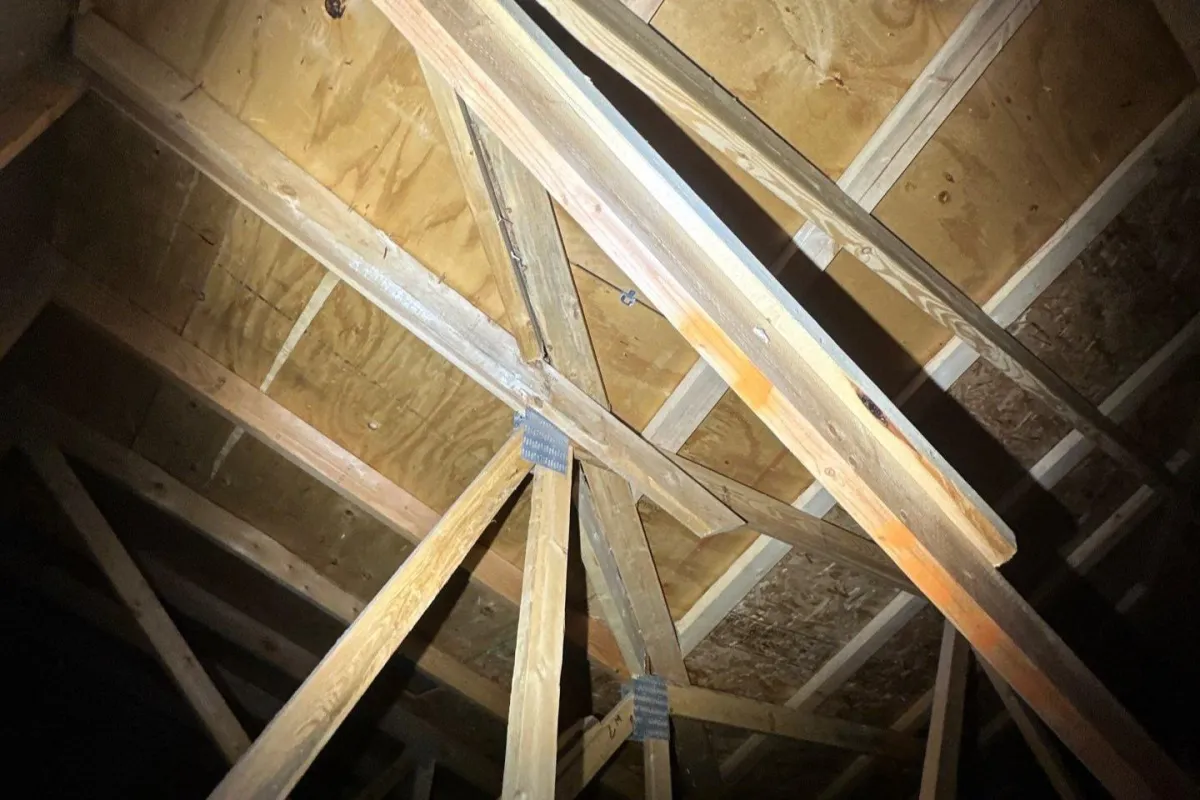
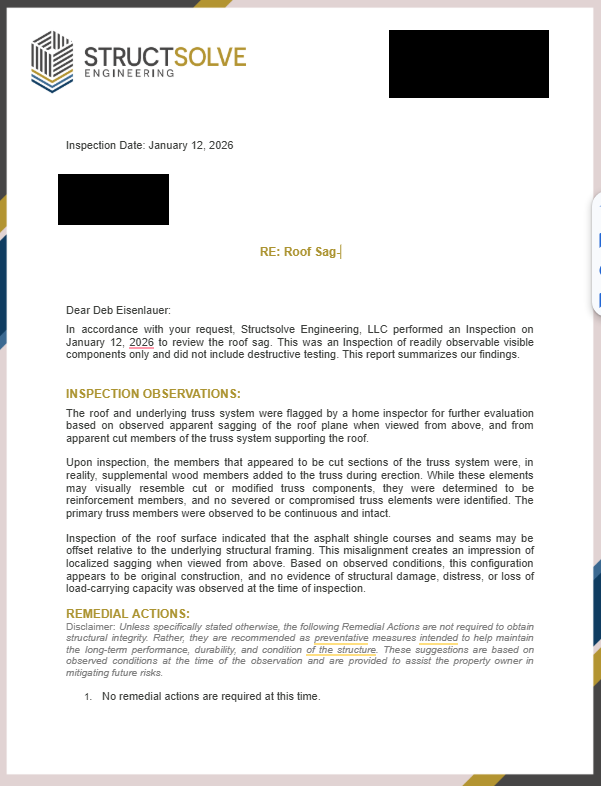
The roof and underlying truss system had been flagged due to apparent sagging visible from above and what appeared to be cut members within the truss assembly. Upon closer inspection, the members that initially appeared to be cut were determined to be supplemental reinforcement elements added during original construction. These members were not severed truss components but rather additional framing pieces installed to strengthen the assembly. The primary truss members were observed to be continuous and intact, with no signs of modification, compromise, or structural distress.

The perceived sagging of the roof plane was also evaluated. Inspection of the roof surface revealed that the asphalt shingle courses and seams were offset relative to the underlying framing. This misalignment created the visual impression of localized sagging when viewed from above. However, no evidence of structural damage, deformation, or loss of load-carrying capacity was observed within the framing system. The roof configuration appeared consistent with original construction practices, and the framing system was functioning as intended.
No structural deficiencies were identified during the inspection, and no remedial action was required at the time of evaluation.
The Outcome
StructSolve concluded that the roof truss system was in good condition and structurally sound. No modifications or deficiencies were observed in the original truss members, and the concerns raised during the home inspection were determined to be visual misinterpretations rather than structural failures.
The findings were documented in a clear, detailed report provided to both the homeowner and the realtor. In addition, StructSolve proactively communicated with the original home inspector to ensure alignment and eliminate uncertainty surrounding the evaluation.
For the homeowner, the impact was immediate. The confirmation that no repairs were required allowed the real estate transaction to move forward without delay. The homeowner expressed relief, noting that she would have been financially responsible for any structural corrections regardless of whether the sale proceeded.
“I was relieved. Either way, I would have had to fix it. But they showed me the pictures, explained everything, and said no action was needed.”
Client Perspective
The client described the experience as efficient, informative, and professional. Clear communication and responsiveness were central to her impression of the project.
“I’d rate it excellent,” she stated. “They were informative and timely. He showed me the pictures and explained why the original inspector thought something had been cut and why it hadn’t. He even pulled up a software program on his phone and showed me exactly what he was talking about.”
She emphasized that the clarity of the explanation eliminated uncertainty and prevented unnecessary repair work.
“I would recommend them to others because they were efficient, timely, and could show me exactly what they meant.”
- All quotes were made by Deb Esienlauer, Client
Lasting Value
In residential real estate transactions, structural concerns can introduce uncertainty, negotiation delays, and unexpected costs. In this case, a potentially deal-breaking issue was resolved through a focused, honest engineering evaluation.
StructSolve did not recommend unnecessary repairs. Instead, the firm provided an objective assessment grounded in observable conditions and recognized standards. The result was clarity and a completed home sale without structural remediation.
This project reflects StructSolve’s commitment to delivering straightforward, technically sound opinions that protect homeowners, contractors, and real estate professionals alike. When structural questions arise, an honest evaluation makes all the difference.
Project Details
Location: Norwalk, Iowa
Client: Homeowner
Service: Observation and Report
Scope: potential roof sagging and cut trusses