confirming the integrity of a pre-built structure
“Creative projects deserve real engineering behind them. Our role is to respect the vision, understand the materials, and turn an unconventional idea into something that’s structurally sound and ready for approval.”
- Caleb Vorpahl, StructSolve Engineering
Overview
Outdoor living structures may arrive pre-cut and packaged, but that doesn’t mean they’re automatically ready for every site. When a 16’ x 12’ Norwood Gazebo (Model #2206038) was planned for installation in Ames, Iowa, StructSolve was brought in to answer a straightforward but critical question:
Will this structure perform safely under local snow and wind demands?
The scope was clear. Provide engineering services to evaluate the pergola as installed by Backyard Discovery and confirm that it could resist the environmental loads expected at the project site, with modifications if required.
Starting With the Data
Unlike many residential projects where field verification drives the analysis, this case began with manufacturer testing data.
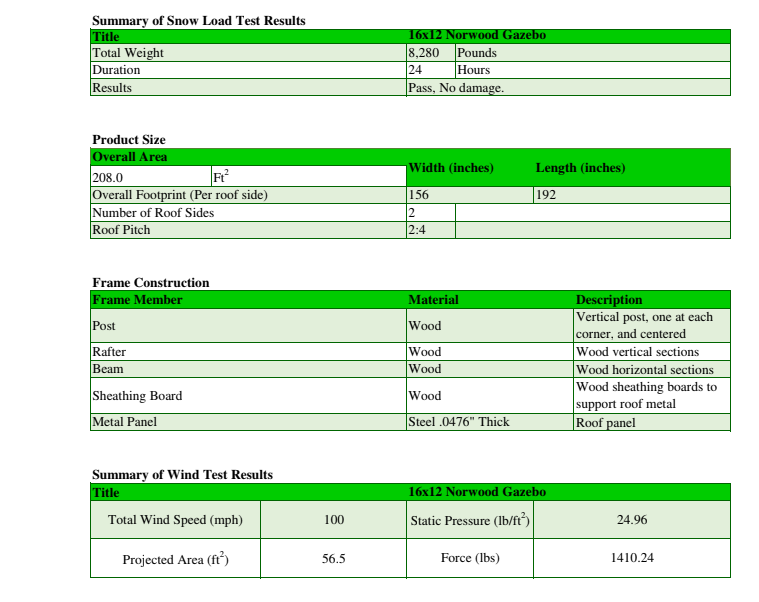
Leisure Time Products had already subjected the structure to controlled load testing. For snow simulation, 8,280 pounds of evenly distributed weight was placed on the roof surface for 24 hours. After inspection, no structural damage was observed.
That load equates to 41.6 psf.
For Ames, Iowa, the required ground snow load is 30 psf.
From a snow loading standpoint, the structure exceeded the local requirement. The pergola, as designed and tested, demonstrated adequate capacity to resist anticipated snow demands at the project location.
Wind: Where Testing Meets Engineering Judgment
The pergola was also tested under 100 mph wind speeds, with no observed damage following inspection.
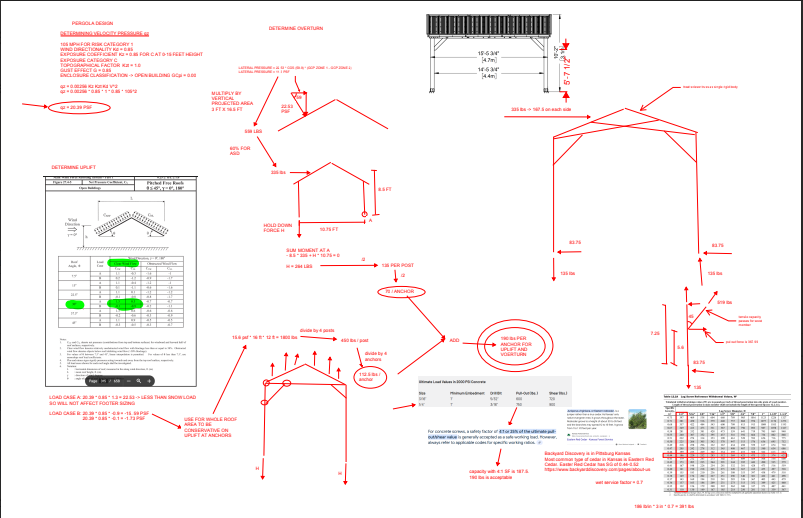
However, the design wind speed in Ames, Iowa for a Category I structure is 105 mph.
That 5 mph difference may sound minor — but wind pressure increases nonlinearly. A small change in wind speed can translate to a meaningful increase in lateral force demand.
This is where engineering analysis becomes essential.
After evaluating the connection forces under the 105 mph design wind speed, StructSolve determined that the primary adjustment needed was at the corbel-to-post connections. The recommendation:
Replace the lag screws attaching the eight corbels to the vertical posts provide lag screws with a minimum 4-inch embedment length.
This modification ensures the connections can resist the increased lateral wind forces expected at the project site.
All other materials and construction methods provided by the manufacturer were deemed sufficient.
Sometimes engineering isn’t about redesigning the whole system — it’s about identifying the one connection that matters most and strengthening it appropriately.
Foundations
Pre-fabricated structures often focus attention on what’s visible above ground. StructSolve’s review extended below grade as well.
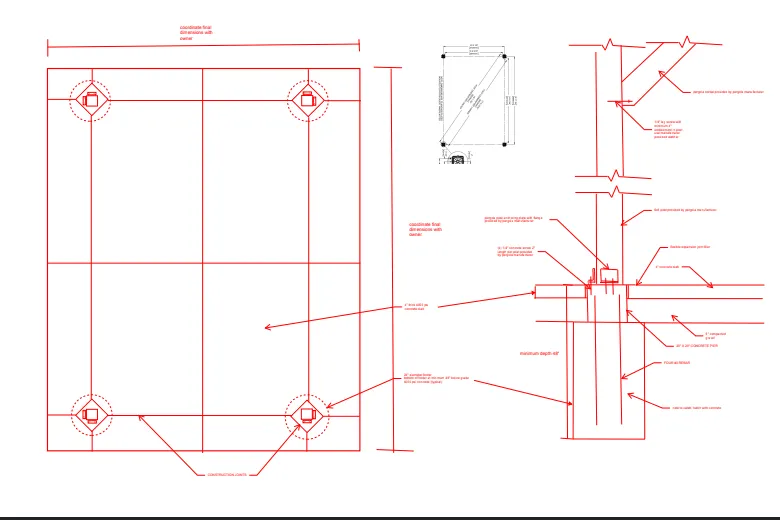
For installation in Ames, the pergola posts must bear on footings extending to a minimum of 48 inches below grade.
That depth is not arbitrary — it ensures performance below frost depth and provides stability against overturning and uplift forces.
The foundation plan (see attached drawings) clarifies layout and installation requirements to ensure that what is built in the field aligns with the structural assumptions in the analysis.
Why This Matters
Pre-engineered doesn’t mean pre-approved everywhere. Climate, wind exposure, frost depth, and connection detailing all matter.
By verifying testing data, analyzing site-specific loads, and making targeted modifications, StructSolve ensured the structure wasn’t just assembled — it was engineered for its environment.
That’s the difference between installing a pergola and installing one that’s built to last.
If questions arise or additional information is needed, StructSolve remains available to assist. We appreciate the opportunity to be of service.
Project Details
Location: Ames, Iowa
Client: Homeowner
Service: Project-Specific Design
Scope: determining the strength of the