A Homeowner Seeks Clarity on Cracking and Movement in Ames, Iowa
“Most homeowners don’t need a sales pitch. They need clear information, delivered calmly, so they can make the right decision without pressure. That’s exactly what Observation and Report is meant to do.”
- Caleb Vorpahl, StructSolve Engineering
The Situation
This project began with a phone call from a homeowner in Ames, Iowa who was concerned about cracking inside her home. Over time, she had noticed recurring cracks in the ceiling of a hallway, along with additional cracking near a decorative ceiling board in a bedroom. The home, built in the mid-1950s, had characteristics common to houses of that era, including older drywall materials and construction methods that differ from modern standards.
The homeowner also reported hearing more creaking and cracking sounds than she expected, especially during seasonal temperature changes. While none of the issues appeared sudden or catastrophic, their persistence raised understandable concern. Before pursuing repairs or contacting contractors, she wanted an objective assessment of whether the issues were cosmetic or structural.
Understanding the Home as a System
StructSolve recommended an Observation and Report, which is designed to evaluate a home as a complete system rather than focusing on a single symptom. The goal of this service is to document conditions, identify potential contributors to movement, and determine whether structural concerns are present.
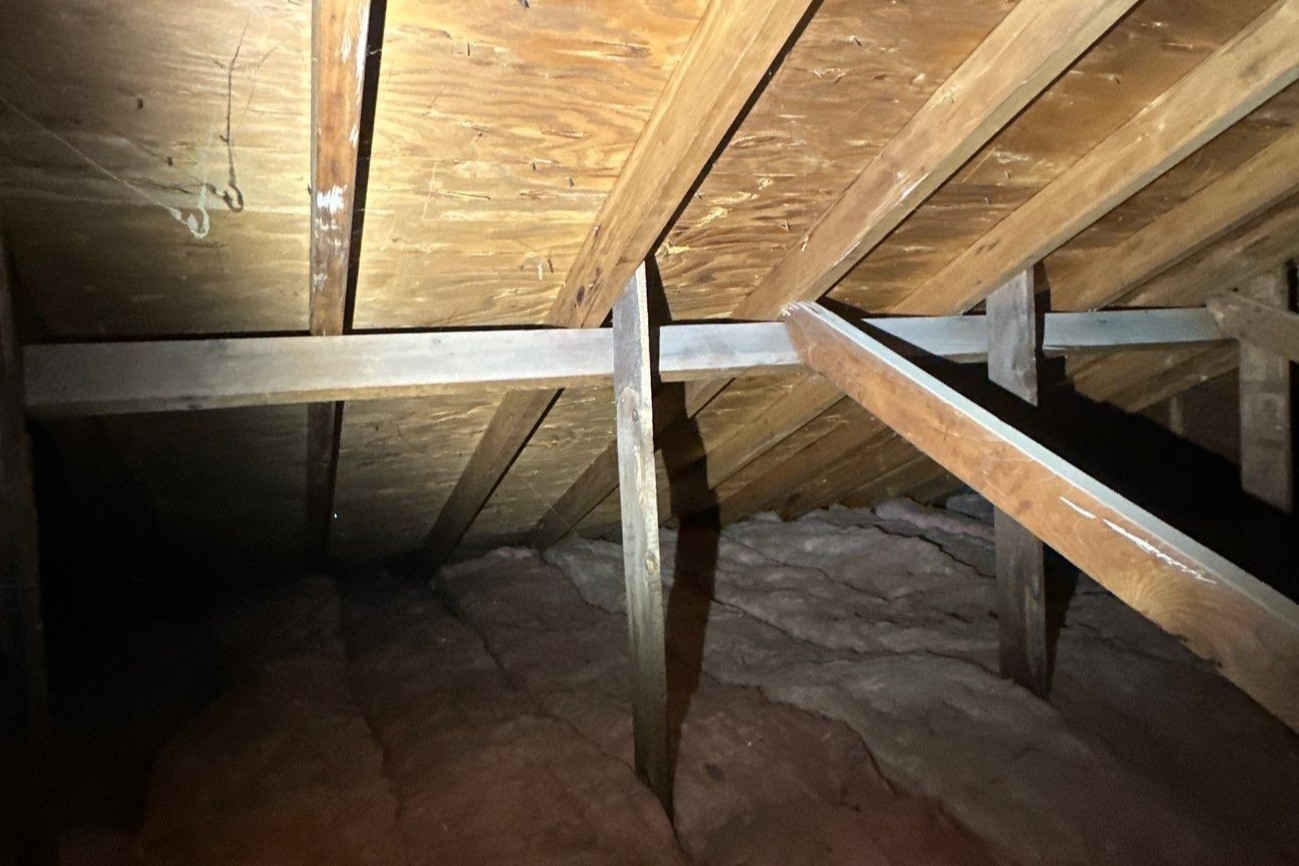
The evaluation included a visual review of the basement, main level, attic, and exterior. Particular attention was given to areas where cracking was visible, along with framing conditions below and above those locations. Measurements, photographs, and level checks were used to document conditions and assess whether movement was active, historic, or within typical ranges for a home of this age.
Although portions of the basement were finished with drywall, accessible framing areas were reviewed, and no signs of distress or failure were observed in those locations.
Findings From the On-Site Evaluation
The report concluded that the observed cracking was consistent with material aging and minor differential movement, rather than structural failure. The drywall in the home appeared to be lightweight and more susceptible to cracking over time, especially with normal expansion and contraction due to temperature and humidity changes.
Slight deflection was observed in one bedroom area, though it remained within acceptable limits and did not indicate an active structural issue. No evidence of roof framing failure, foundation distress, or floor system instability was identified during the inspection.
A localized area near a masonry chase was reviewed closely, as changes in stiffness around such elements can sometimes contribute to cracking. While minor movement was present, the condition did not warrant immediate structural intervention.
Recommendations Focused on Monitoring and Prevention
Rather than recommending invasive or costly repairs, the report focused on preventive and monitoring-based guidance. Suggested actions included maintaining proper drainage around the foundation, monitoring crack progression over time, and addressing cosmetic repairs only after confirming that movement had stabilized.
The report also outlined what indicators would warrant future re-evaluation, such as rapid crack growth, changes in door or window operation, or new signs of framing distress. By defining these thresholds clearly, the homeowner was given a practical framework for understanding her home’s behavior without unnecessary alarm.
Why Observations and Reports Matters
This case highlights the value of engineering input early in the decision-making process. Without a neutral assessment, homeowners often face pressure to pursue repairs without knowing whether they are truly needed.
An Observation and Report provides clarity by separating cosmetic concerns from structural ones. It allows homeowners to make informed decisions, prioritize maintenance appropriately, and avoid unnecessary work based on incomplete information.
Project Details
Location: Ames, Iowa
Client: Homeowner
Service: Observation and Report
Scope: Interior ceiling cracking and perceived movement