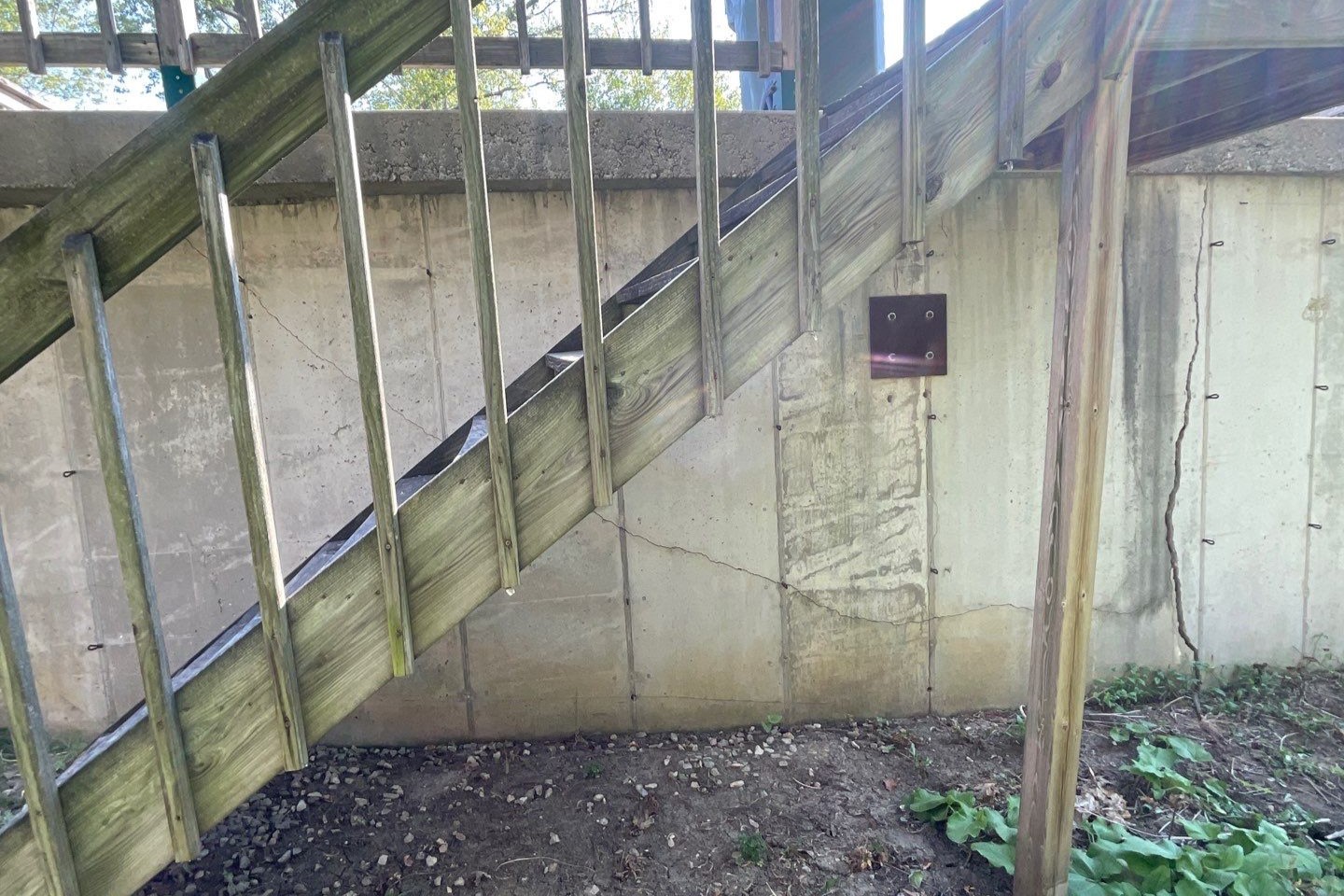
Water Main Burst Leaves Homeowner Stunned and Concerned About Parking
“Most homeowners don’t need a sales pitch. They need clear information, delivered calmly, so they can make the right decision without pressure. That’s exactly what Observation and Report is meant to do.”
- Caleb Vorpahl, StructSolve Engineering
The Situation
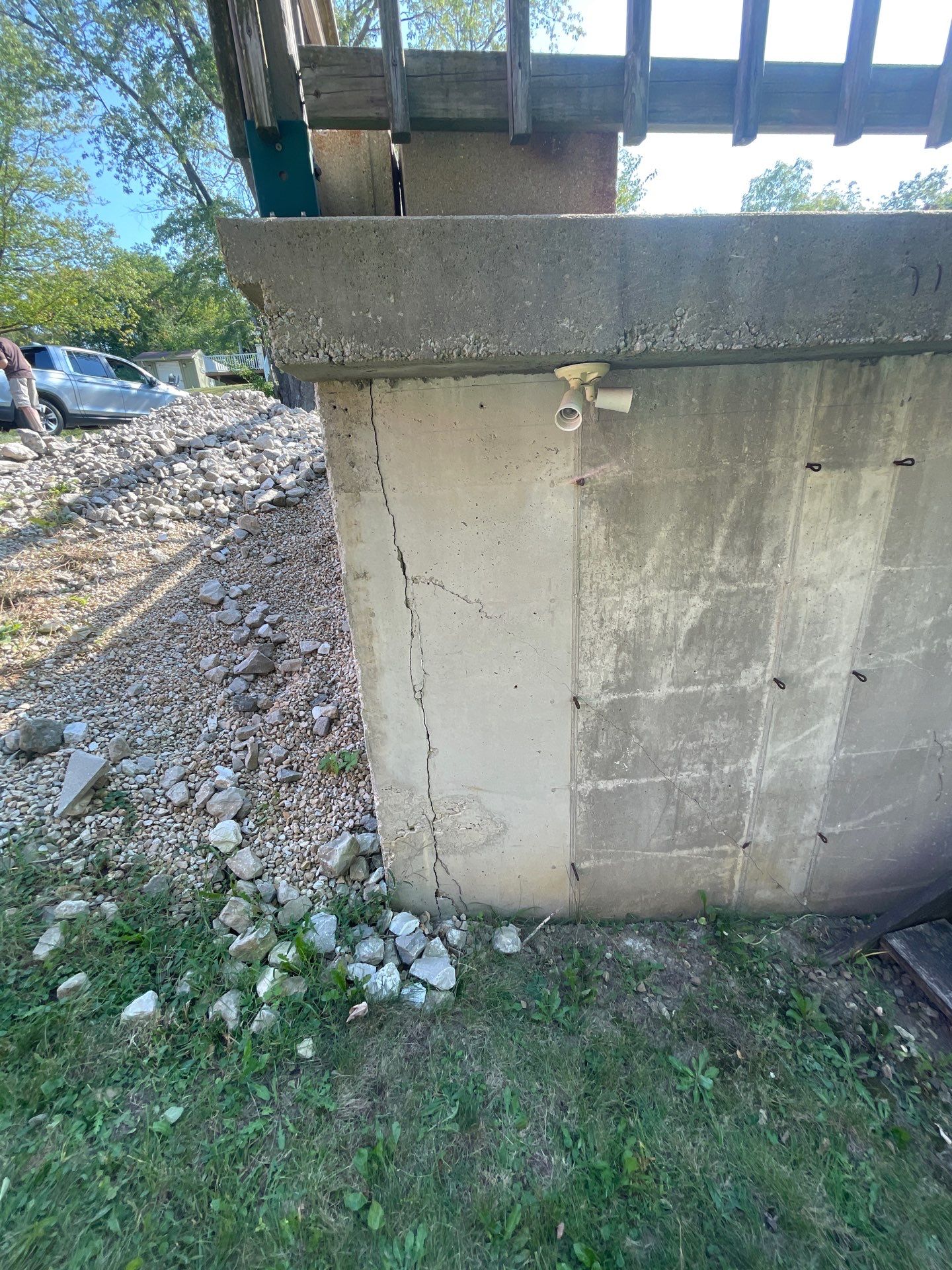
This project began with a call from a homeowner in Brooklyn, Iowa who was concerned about the structural integrity of his concrete driveway and detached shed after a water main burst beneath the slab.
The underground water line rupture occurred below the driveway, allowing a significant amount of water to flow into the supporting soils before the leak was located and repaired. Shortly afterward, the homeowner began questioning whether the sudden saturation may have washed out supporting soil or compromised the stability of the driveway slab and adjacent detached shed.
He noticed minor cracking in the driveway concrete and slight separation near the shed slab that he did not recall seeing previously. While no dramatic collapse or visible sinkhole had formed, the possibility of hidden soil erosion beneath the slab raised understandable concern. He contacted StructSolve to perform an independent structural evaluation to determine whether the water event had compromised the driveway or shed foundation.
Evaluating the Slab and Adjacent Structure

StructSolve recommended an Observation and Report to assess the condition of both the driveway slab and the detached shed's retaining wall as a system.
When water infiltrates beneath exterior flatwork, the primary risk involves erosion of supporting soils, potential void formation, and localized settlement. The evaluation included a visual review of the driveway surface, slab edges, control joints, and connection points to the shed foundation. The detached shed structure was also reviewed for signs of differential settlement, framing distortion, or door misalignment.
Elevation observations were performed to assess for measurable displacement across the driveway slab. Visible cracking patterns were documented to determine whether they were consistent with shrinkage and age-related movement or indicative of sudden soil loss.
Exterior grading and drainage patterns were also reviewed to determine how water may have migrated during the failure event.
Findings From the On-Site Evaluation
The evaluation found no evidence of structural failure of the driveway slab or detached shed foundation at the time of inspection.
Observed driveway cracking was consistent with typical exterior concrete shrinkage and seasonal movement common in Iowa’s freeze-thaw climate. No measurable vertical displacement was observed between slab sections, and no voids were visible along slab edges.
The detached shed structure showed no signs of active settlement. Wall framing appeared plumb, and the shed door operated normally without binding — indicators that significant differential movement had not occurred.
While temporary soil saturation likely occurred during the water main failure, there were no visible signs of ongoing soil erosion or slab undermining at the time of evaluation.
Recommendations for Repair and Restoration

Due to the extent of cracking and observed settlement within the driveway slab, structural repairs were recommended. The affected sections of the driveway should be removed and replaced after addressing the underlying soil conditions. Prior to re-pouring concrete, the subgrade should be evaluated for voids or loose material and properly compacted to restore adequate bearing support. In areas where erosion is suspected, additional fill and compaction or stabilization measures may be necessary to prevent future settlement.
The detached shed foundation should also be addressed to correct differential movement. Depending on final contractor evaluation, this may include slab replacement, localized underpinning, or re-leveling of the structure to restore proper alignment and load distribution.
Improved surface drainage around the driveway and shed was recommended to reduce the risk of future soil saturation. Any plumbing repairs or future excavation beneath the slab should include careful backfilling and compaction to help maintain long-term stability.
Following completion of repairs, a follow-up review may be considered to confirm that structural concerns have been properly addressed and that no additional movement is occurring.
Why Engineering Evaluation Matters After Subsurface Water Events

Water main breaks beneath exterior slabs can create concern about hidden soil erosion and long-term stability. However, not every saturation event results in structural damage.
An Observation and Report provides objective documentation of current conditions, distinguishes cosmetic cracking from structural movement, and establishes clear thresholds for re-evaluation.
In this case, the homeowner in Brooklyn gained clarity and peace of mind that his driveway and detached shed remained structurally stable — without the need for unnecessary slab replacement or invasive repair.
Project Details
Location: Brooklyn, Iowa
Client: Homeowner
Service: Observation and Report
Scope: Water Main burst and slab cracking due to it.