Flooded Basement Inspection
The Situation
In early 2025, a homeowner in Iowa City experienced a significant basement flooding event after a water main froze and burst due to cold weather. The homeowner had been away from the residence for an extended period, allowing indoor temperatures to fall well below freezing. As a result, the basement flooded with approximately five feet of water, which later froze, remained in place for a time before professional remediation could begin.
Following the removal of the flood water, the homeowner observed cracking, leaning, and bowing in the basement foundation walls and sought an engineering opinion to understand the condition of the structure and determine what repairs were necessary to safely move forward.
The Inspection
We performed a non-invasive structural inspection on October 1, 2025, focused on the observable

conditions of the home’s foundation system. The property, originally constructed in 1955, is a single- family residence with a CMU (concrete masonry unit) foundation. The purpose of the inspection was to conduct an O&R and assess the structural integrity of the foundation after prolonged flooding and freezing conditions, and to provide clear recommendations for remedial action.
What We Observed
During the inspection, several site conditions were identified that contributed to moisture-related risks at the foundation. The exterior grading around the home was relatively flat, increasing the likelihood of water ponding and prolonged soil saturation adjacent to the foundation. The gutter system was obstructed by plant debris, which limited proper roof drainage and increased the potential for uncontrolled water runoff. Cracks between the concrete patio and the foundation wall created additional pathways for water to penetrate the surrounding soil, and the absence of window well covers further increased the risk of moisture intrusion at below-grade openings.
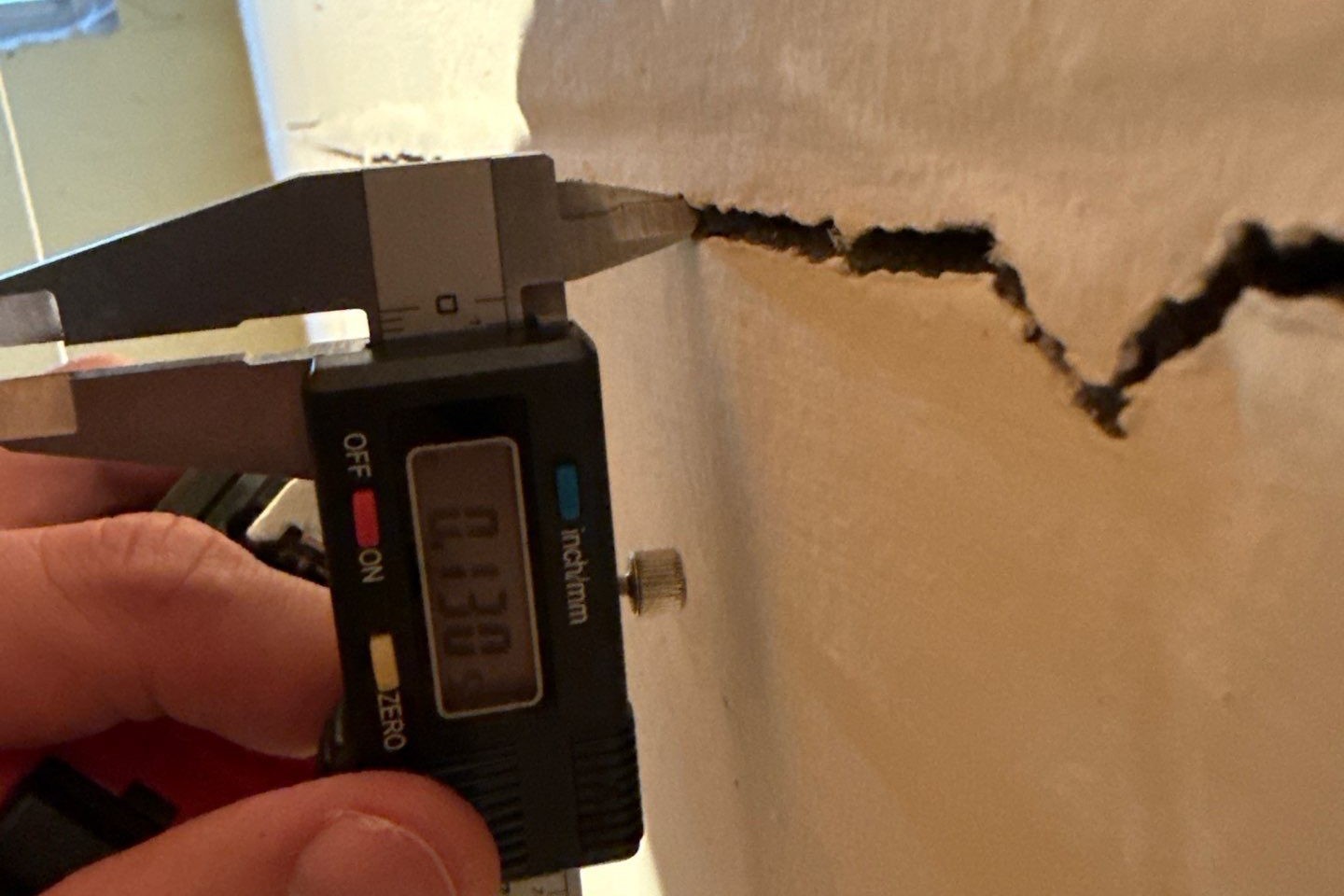
Within the basement, the foundation walls exhibited a combination of horizontal and stair-step cracking consistent with lateral soil pressure and prolonged moisture exposure. Several sections of the CMU foundation showed measurable bowing and inward movement, with portions exceeding recommended tolerances and others remaining marginally within acceptable limits.
While not all wall segments required immediate stabilization, the observed cracking and deformation indicated that corrective action and continued monitoring were necessary. Overall, the conditions observed were consistent with the effects of prolonged flooding, freezing temperatures, and inadequate exterior water management.
Recommended Remedial Actions
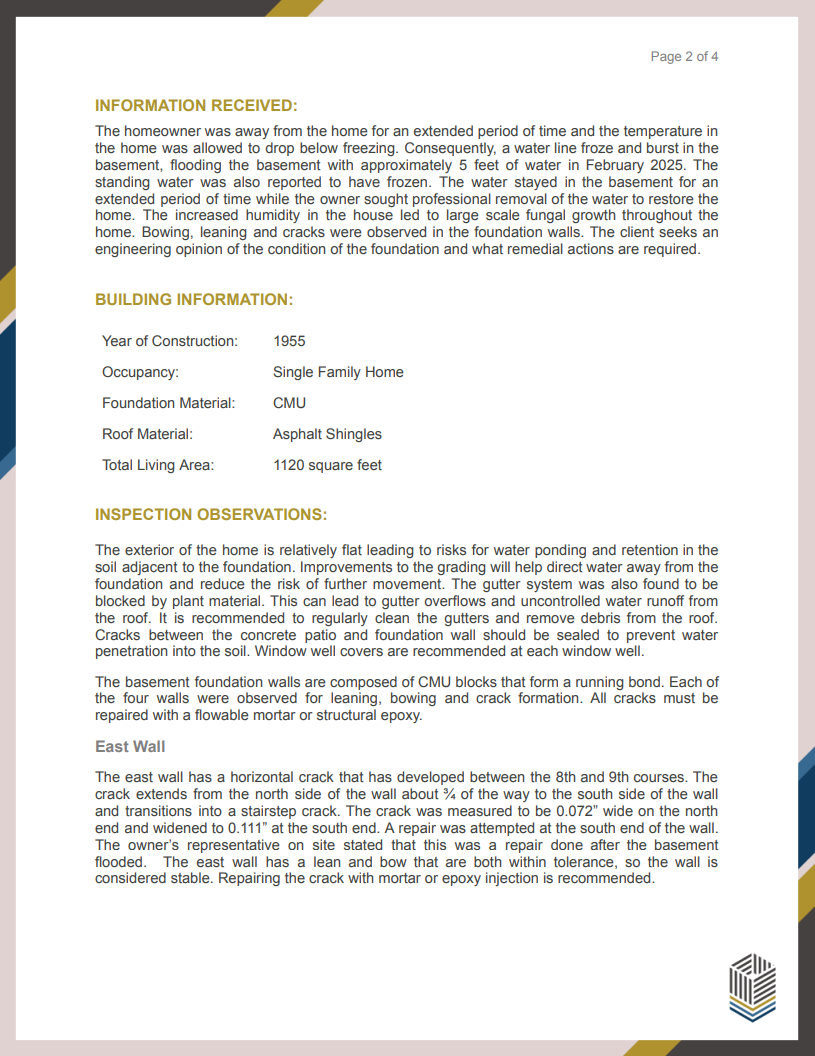
Based on the conditions observed at the time of the inspection, StructSolve Engineering recommended a combination of targeted structural repairs and exterior water mitigation measures to support the long-term performance of the foundation. Improvements to the exterior grading were advised to promote
positive drainage away from the home, in accordance with current code requirements, and to reduce moisture retention in the soil adjacent to the foundation. Regular maintenance of the gutter system and roof surfaces was also recommended to help control roof runoff and prevent uncontrolled water discharge near the foundation.
Cracks observed in the foundation walls were recommended to be repaired using either flowable mortar or structural epoxy injection to restore continuity and limit further moisture intrusion. To address areas where inward movement exceeded acceptable tolerances, the installation of wall bracing was recommended along portions of the foundation requiring stabilization. In areas where wall movement was marginally within tolerance, optional bracing was suggested as a proactive measure to reduce the likelihood of future movement and potentially lower long-term repair costs. Where bracing was deferred, ongoing monitoring of the foundation walls was advised, with additional stabilization recommended if cracking or movement progressed.
These recommendations were provided as preventative and corrective measures intended to maintain structural performance and reduce future risk, based on conditions visible at the time of the inspection.
Client Perspective
The client described the experience as straightforward and professional, emphasizing the value of clear documentation and communication.
“Good communication and timeliness. You showed up when you said you would, early in fact, and the inspection was quick. The communication and responsiveness were key.”
- Brad Bishop, Client
Lasting Value
The solution helped eliminate potential grey involved in the project and avoid pushback on what is being done. The client would recommend StructSolve Engineering to others and plans to rely on the firm again for future residential engineering needs. In a market where residential structural expertise can be difficult to find, clarity, responsiveness, and practical guidance made a meaningful difference.
Project Details
Location: Iowa city, Iowa
Client: Contractor
Service: Observation and Report
Scope: interior basement walls cracking and potential bowing